In short: a fungal nail infection lives under the hard nail plate, in the nail bed, which is why creams and paints so often fail to reach it. We use a GenesisPlus Nd:YAG 1064nm laser, which is FDA-cleared and needle-free, and which clears the infection in about 85% of cases after two to three sessions. A toenail takes 9 to 12 months to grow out, so the nail keeps looking damaged for months after the fungus itself has been dealt with.
What a fungal nail infection is
Onychomycosis is the medical name for a fungal infection of the nail. It affects up to 10% of people worldwide and becomes more common with age. It is not a hygiene problem, and it is not something you have done wrong.
Three groups of organisms are responsible: dermatophytes, from the same family behind tinea and athlete’s foot, along with yeasts and non-dermatophyte moulds. All of them like warm, dark, damp conditions, which describes the inside of a closed shoe almost perfectly. Most people pick the infection up by:
- Walking barefoot through public pools, gym change rooms and shared showers
- Visiting nail salons where files and clippers are not properly sterilised
- Wearing tight or non-breathable shoes that keep the foot warm and sweaty
- Nail trauma, from a stubbed toe or a dropped weight to the steady pressure of a running shoe, which lifts the nail and gives fungus a doorway
- Leaving athlete’s foot on the skin untreated until it reaches the nail
If you live with diabetes, reduced circulation or a suppressed immune system, a fungal nail deserves earlier attention, because a thickened nail edge can break the skin. Our diabetic foot care page explains how we assess that risk.
Signs to look for
Fungal nails change slowly, over months rather than days. What we see most often is:
- Discoloured nails, usually white, yellow or brown
- Yellow streaks running under the nail
- Distorted or thickened nails that are hard to cut
- A brittle, crumbly or ragged edge that breaks rather than trims
- The nail separating from the skin underneath
- Chalky debris building up under the nail
- White spots or streaks on the nail surface
Not every thick or discoloured nail is fungal. Old trauma, psoriasis and bruising can look much the same, and a dark streak in a nail sometimes needs investigating rather than treating. We assess the nail and the skin around it first, and may suggest a nail sample be tested, so you are not spending months treating the wrong problem.
Why creams and paints often fail
The infection does not sit on top of the nail. It lives in and under the nail plate, and that plate is a dense barrier built to protect what is underneath. A cream or lacquer has to cross it in useful concentration to reach the fungus, and most struggle, particularly once the nail has thickened or the infection has reached the base where new nail is made. That is why people apply something faithfully for months and see almost no change. Reducing the thickness of the nail helps a topical work better, and we often do that, but on its own it rarely clears an established infection.
Oral antifungal tablets do reach the nail bed through the bloodstream and work well for many people, but they are a systemic medicine taken for months at a time.
How the GenesisPlus laser works
We use the GenesisPlus Nd:YAG 1064nm laser, which is FDA-cleared for this purpose, and we have been treating fungal nail infections with laser since 2012. Light at this wavelength passes straight through the nail plate without damaging it, then is absorbed by pigment in the fungus sitting in the nail bed below. That energy heats the organism to a temperature it cannot survive, which clears the way for normal nail to grow back in its place.
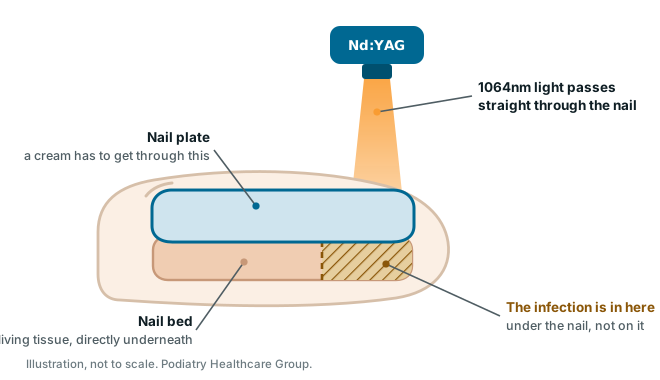
Nothing is cut, drilled off or removed, no needle is used, and no medication enters your system. Patients feel only a warm sensation as the laser passes over the nail. There is no downtime, so you can put your shoes straight back on and get on with your day. Around 85% of patients see the infection resolve after two to three sessions. It is the same laser we use for stubborn plantar warts.
What treatment looks like
Your first visit is an assessment rather than a treatment. We look at all ten nails, check the surrounding skin for tinea, and ask about your footwear, general health and medications. If laser is the right option we will say so, and if it is not, we will tell you that too.
Before each session the nail is reduced and the debris underneath cleared, so light reaches the nail bed instead of scattering through a crumbling nail plate. Any polish needs to be off. The laser itself takes a few minutes per nail, sessions are spaced out, and we review the nail as it grows.
The wait is the hard part, so it is worth being clear about it. A big toenail takes roughly 9 to 12 months to grow from base to tip. Even when treatment has worked, the damaged section still has to grow off the end, so appearance always lags behind the treatment. Judge progress by the new nail at the base: clear, smooth growth pushing the old nail forward is the sign it is working. We photograph the nail at the start so you have something honest to compare against.
Keeping it from coming back
Fungus is common in the environment, so reinfection is possible. A few habits make a real difference:
- Dry your feet properly after showering, especially between the toes
- Rotate your shoes and give each pair a day to dry out
- Wear moisture-wicking socks and change them daily
- Wear thongs in public showers, pool surrounds and gym change rooms
- Use your own clippers and files, and choose a salon that sterilises its instruments
- Treat athlete’s foot promptly, before it reaches the nail
- Cut nails straight across rather than digging down the sides, which also helps avoid ingrown toenails
Footwear matters too, and it is something we can get specific about: Bryce Foothead spent time managing a technical footwear store, so shoe advice here goes a good deal further than telling you to buy a wider pair. For a broader look at looking after your feet, start with our foot health guide.
Common questions
Does laser treatment for fungal nails actually work?
For most people, yes. Around 85% of patients clear the infection after two to three sessions with the GenesisPlus laser. No fungal nail treatment works for everyone, so we assess the nail first and will tell you honestly if we think another option suits you better.
Does it hurt?
No. The treatment is needle-free, and most patients feel nothing more than a warm sensation as the laser passes over the nail. No anaesthetic is needed and there is no downtime afterwards.
Can I have laser treatment while pregnant or breastfeeding?
We take a conservative view and generally recommend waiting until after pregnancy and breastfeeding. A fungal nail is not urgent, so there is no reason to treat it now when it can comfortably wait, and oral antifungal tablets are usually avoided at this time as well. In the meantime we can reduce and tidy the nail and treat any skin infection around it. Let us know if you are pregnant or trying to conceive and we will plan around it.
Can I wear nail polish over a treated nail?
Polish has to come off completely before each session, because the laser needs a clear path through the nail. Between sessions you can wear it for an occasion, but constant polish hides the new growth we use to measure progress, holds moisture against the nail, and gel or shellac removal can weaken an already fragile nail further. Give the nail regular stretches with nothing on it.
How many sessions will I need, and how far apart?
Most people need two to three sessions. How many, and how they are spaced, depends on how many nails are involved, how far the infection has advanced and how quickly your nails grow. We map out a plan at your first assessment rather than guess before we have seen the nail.
Can I claim it on Medicare or private health?
We work with all major Australian health funds and have HICAPS at every clinic, so any rebate you are entitled to is processed on the spot. What comes back depends on your fund and level of cover. Medicare rebates run through a GP Enhanced Primary Care plan and are limited to chronic conditions such as diabetes, arthritis or vascular disease. Our FAQ page covers rebates, referrals and payment in more detail.
This page is general information, not personal medical advice. Reviewed by Gideon Poratt, Principal Podiatrist (B.App.Sc (Pod), M.A.Pod.A), a member of the Australian Podiatry Association. Please book an assessment for advice specific to your feet.